
Introduction
In 2026, Artificial Intelligence (AI) is no longer a futuristic concept—it’s a fundamental part of everyday life. From personalized recommendations on apps to advanced automation in industries, AI is reshaping how we interact with technology. Businesses, governments, and individuals are leveraging AI to improve efficiency, decision-making, and innovation.
AI in Everyday Life
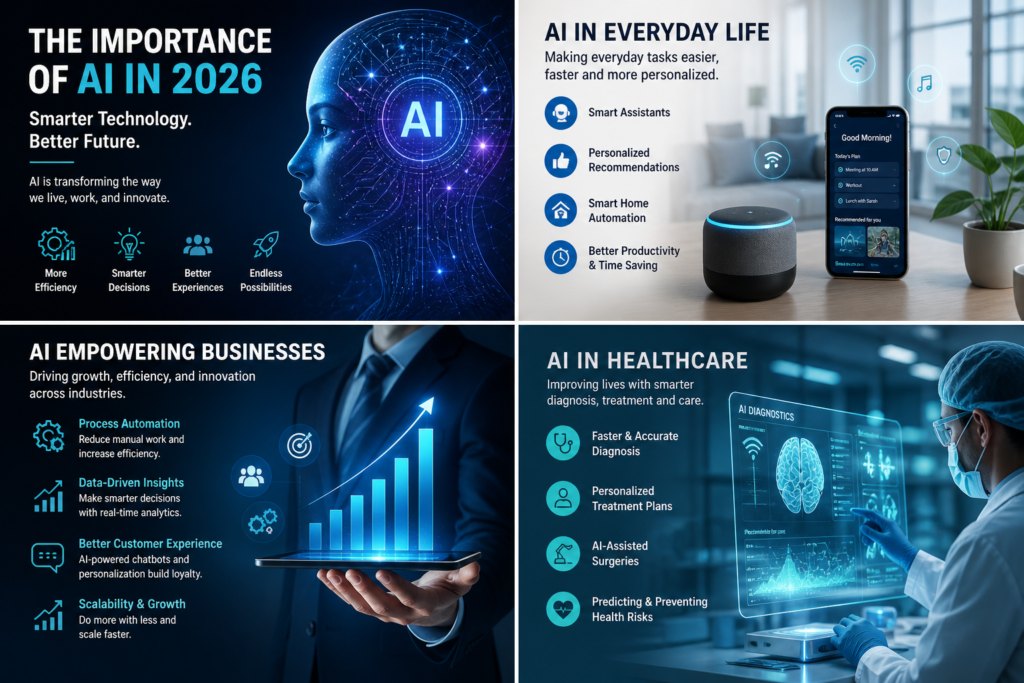
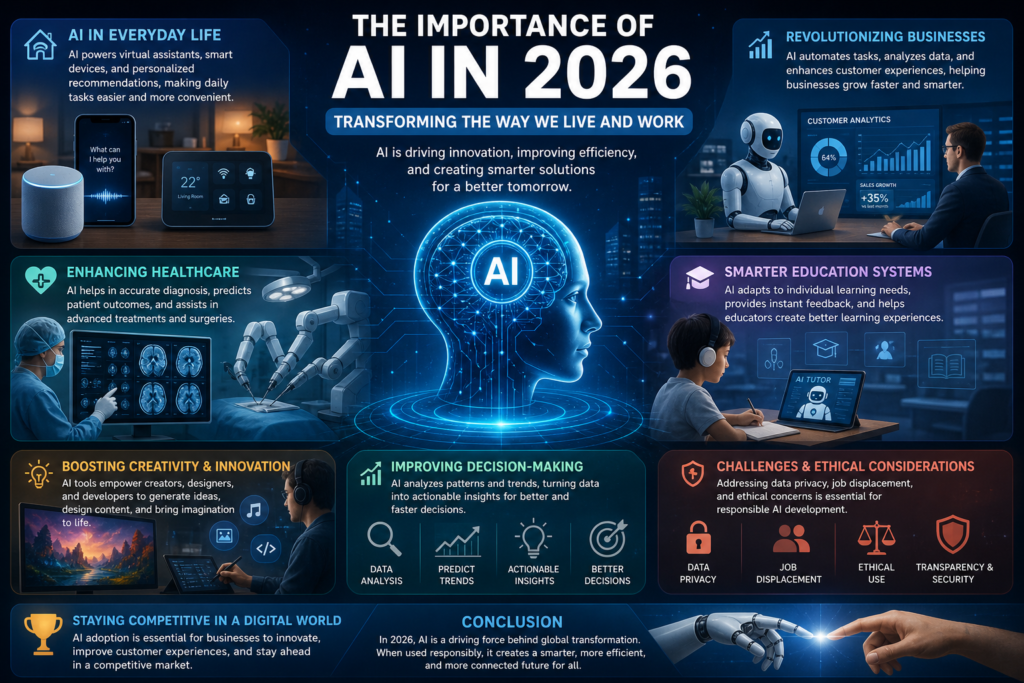
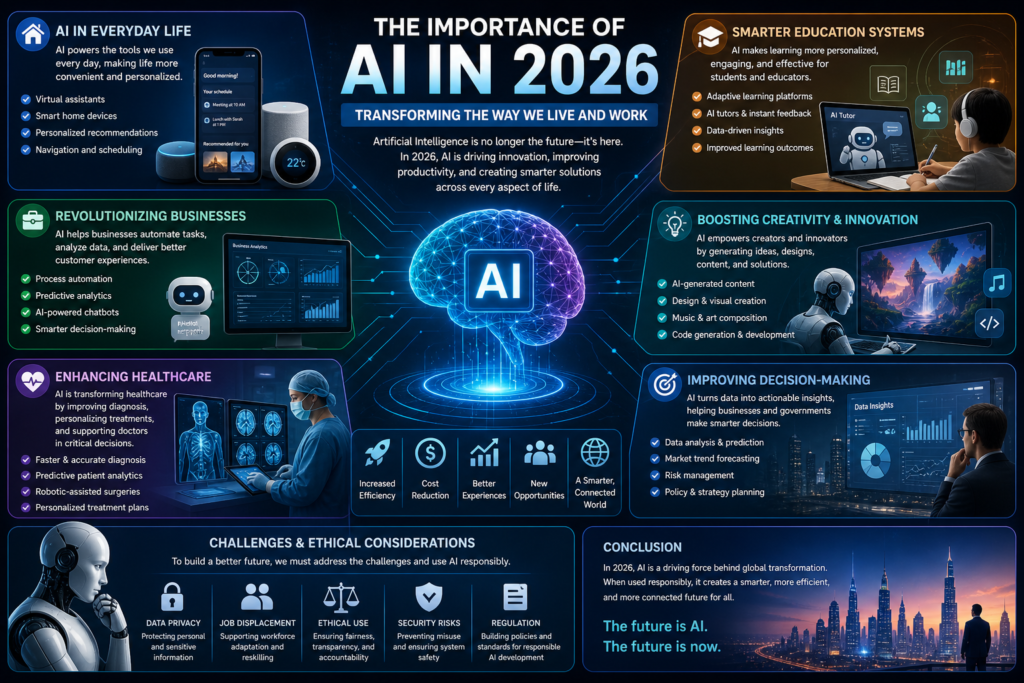
AI has seamlessly integrated into our daily routines. Virtual assistants, smart home devices, and recommendation systems are powered by AI, making life more convenient and personalized. Whether it’s suggesting what to watch, helping you navigate traffic, or managing your schedule, AI enhances productivity and saves time.
Revolutionizing Businesses
One of the biggest impacts of AI in 2026 is in the business world. Companies use AI to automate repetitive tasks, analyze large datasets, and improve customer experiences. Chatbots handle customer queries instantly, while AI-driven analytics help businesses make smarter decisions. This not only reduces costs but also increases efficiency and scalability.
Enhancing Healthcare
AI is playing a critical role in transforming healthcare. It helps doctors diagnose diseases faster and more accurately, predicts patient outcomes, and even assists in robotic surgeries. Personalized treatment plans based on patient data are becoming more common, improving overall healthcare quality and accessibility.
Smarter Education Systems
Education has also evolved with AI. Intelligent learning platforms adapt to individual student needs, making education more personalized and effective. AI tutors provide instant feedback, while educators use data insights to improve teaching methods. This ensures better learning outcomes for students across different levels.
Boosting Creativity and Innovation
AI is not just about automation—it’s also a tool for creativity. Content creators, designers, and developers use AI to generate ideas, design visuals, and even compose music. This collaboration between human creativity and machine intelligence is leading to innovative solutions across industries.
Improving Decision-Making
In 2026, data is one of the most valuable assets, and AI helps make sense of it. By analyzing patterns and trends, AI provides actionable insights that support better decision-making. Businesses can predict market trends, while governments can plan policies more effectively.
Challenges and Ethical Considerations
Despite its benefits, AI comes with challenges. Issues like data privacy, job displacement, and ethical concerns are still relevant. It is important to develop responsible AI systems that are transparent, fair, and secure. Governments and organizations must work together to create regulations that ensure AI is used ethically.
Staying Competitive in a Digital World
AI adoption is no longer optional—it’s essential for staying competitive. Businesses that fail to integrate AI risk falling behind. Embracing AI allows companies to innovate, improve customer experiences, and adapt to changing market demands.
Conclusion
In 2026, AI is a driving force behind global transformation. It is improving efficiency, enhancing experiences, and opening new opportunities across industries. While challenges exist, the benefits of AI far outweigh the risks when used responsibly. Investing in AI today is not just about technology—it’s about building a smarter, more connected future.